The business world is driven by psychological triggers, operational economics, and market realities. Behind every successful venture, retail store, or daily consumer habit lies a complex framework of strategic decisions designed to drive revenue, optimize efficiency, or influence buyer behavior.
Below, we break down 15 fascinating facts about the global business landscape, exploring how companies maximize profits, why certain business myths persist, and how small strategic changes produce massive financial gains.
1. Restaurant Failure Rates: Debunking the 90% Myth
It is commonly repeated that 90% of restaurants fail during their first year of operation. However, empirical studies from institutions like the National Restaurant Association and academic researchers present a more nuanced reality.
The actual failure rate for independent restaurants in their first year sits closer to 20% to 30%, with roughly 60% closing or changing ownership within their first three years. While the industry remains high-risk due to thin profit margins, labor costs, and changing consumer tastes, the “90% in Year One” statistic exaggerates the immediate risk of opening a food service business.
2. Tuesday: The Most Productive Day of the Workweek
Workplace productivity metrics consistently highlight Tuesday as the peak performance day for corporate employees.
- Monday Fatigue: Mondays are often consumed by administrative catch-up, unread emails, and adjusting to the work mindset after the weekend.
- Tuesday Focus: By Tuesday, workers have cleared administrative backlogs and possess maximum mental focus to tackle primary deliverables before midweek burnout sets in.
- Late-Week Decline: Productivity declines toward Thursday and Friday as fatigue accumulates and focus shifts toward weekend preparation.
3. Product Innovation vs. The Global Toy Market
Approximately 33 major new products enter the global consumer market every single day. Remarkably, roughly 13 of these daily releases belong to the toy and games sector.
The high volume of toy launches is driven by short product lifecycles, evolving media franchises, and seasonal buying cycles centered around major holidays. Manufacturers continually introduce line extensions, collectible items, and tech-integrated toys to retain interest among fast-changing age demographics.
4. Daily Wealth Generation: 65 New Millionaires Every Day
Global wealth generation mechanisms—including real estate appreciation, equity markets, business ownership, and tech innovation—create dozens of new high-net-worth individuals daily.
Estimates indicate that roughly 65 individuals reach a net worth of $1 million or more every single day. This wealth creation is heavily concentrated in expanding sectors such as technology, financial services, e-commerce, and specialized consulting.
5. Is Coffee Really the Second Most Traded Commodity?
A widely circulated business myth claims that coffee is the second most traded commodity globally after crude oil. While coffee is indeed the #1 most traded tropical agricultural crop and the most consumed beverage crop worldwide, it does not rank second among all commodities.
In total global trade value, coffee sits far behind major industrial commodities, precious metals, and agricultural staples.
| Commodity Category | Leading Traded Goods | Coffee’s Actual Position |
|---|---|---|
| Energy | Crude Oil, Natural Gas, Refined Petroleum | Outranked by energy markets |
| Metals & Minerals | Gold, Copper, Iron Ore, Aluminum | Outranked by industrial metals |
| Agriculture | Soybeans, Wheat, Corn | Ranks behind major grain crops |
| Global Trade Rank | Total Export Value: ~$40B–$70B | Ranks ~98th overall among traded products |
6. China’s Dominance in Global Toy Manufacturing
China produces approximately 80% of all toys distributed worldwide.
This manufacturing concentration is supported by concentrated supply chain hubs in Guangdong and Zhejiang provinces, access to raw plastic materials, advanced molding infrastructure, and lower labor costs. Despite supply chain diversification trends, China remains the global leader in toy manufacturing and international export volume.
7. High-Margin Economics: How Fast Food Generates Revenue
While fast-food chains are known for burgers and fried chicken, their primary profit engines are beverages and sides.
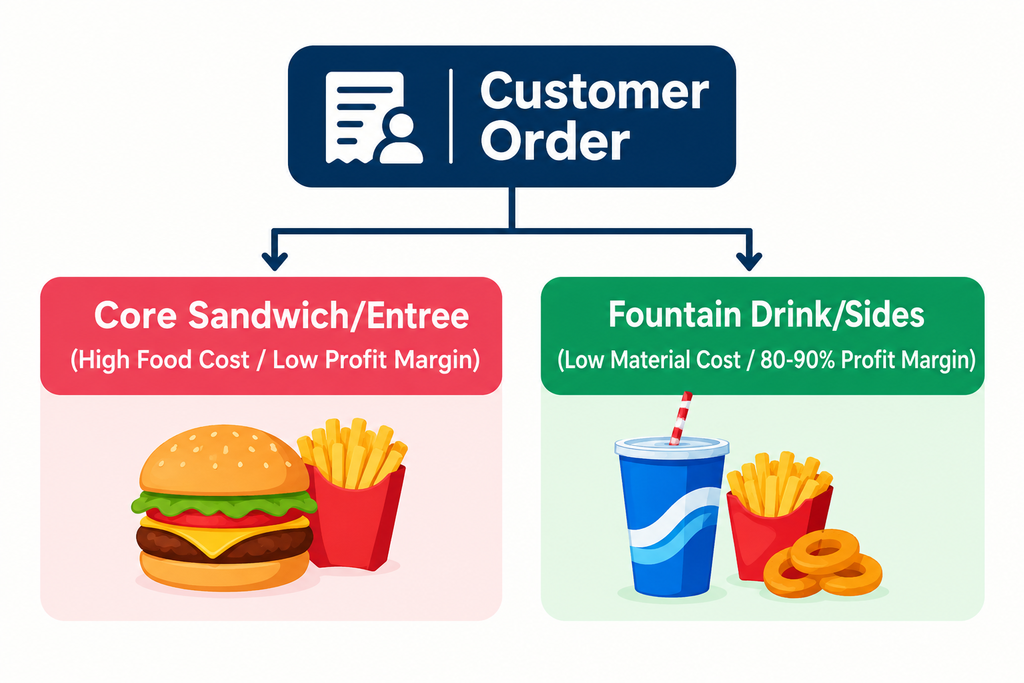
Fountain drinks carry exceptionally low syrup and carbonation costs, yielding gross profit margins between 80% and 90%. A significant portion of a fast-food franchise’s net operating income stems from beverage add-ons rather than primary meal entrees.
8. Shelf Psychology: Eye-Level Product Placement for Children
Retailers use precise spatial psychology to arrange product shelves. While premium adult brands buy “eye-level” eye-line space, children’s toys, sugary cereals, and targeted snacks are deliberately placed on lower shelves (2 to 3 feet from the floor).
This placement brings items directly into a child’s field of vision and physical reach, triggering “pester power”—the phenomenon where children request immediate purchases from nearby parents while navigating store aisles.
9. Higher Education vs. Self-Made Wealth
Higher education is a common path to professional stability, but higher degrees are not a strict prerequisite for high net worth.
Data on global wealth distribution reveals that approximately 20% of self-made millionaires never completed a four-year college degree. Many of these individuals accumulated capital through non-traditional routes, including:
- Trades and specialized technical contracting.
- Direct entrepreneurship and franchise ownership.
- Early entry into real estate investment and development.
- E-commerce and digital asset creation.
10. Operational Efficiency: The $40,000 Olive Adjustment
In the late 1980s, American Airlines executive Robert Crandall demonstrated how minor operational adjustments compound into massive savings.
By removing a single olive from each first-class salad, American Airlines reduced annual catering expenses by approximately $40,000 without impacting customer satisfaction scores.
| Airline Operational Metric | Standard First-Class Service | Optimized Service |
|---|---|---|
| Salad Garnish | 5 Olives per bowl | 4 Olives per bowl |
| Customer Perception | Standard First-Class Meal | Identical Perception |
| Annual Financial Impact | Full Catering Expense | ~$40,000 Annual Savings |
11. Scent Marketing in Modern Retail Environments
The pleasant aromas encountered in modern retail stores—such as fresh linen in clothing shops, rich vanilla in boutique bakeries, or coffee notes in bookshops—are rarely organic byproducts.
Stores utilize ambient scenting systems to diffuse micro-droplets of artificial fragrances into air conditioning units. Research in consumer behavior indicates that strategic scenting can increase dwell time by up to 40% and elevate brand recall, directly boosting overall purchase values.
12. Acoustic Engineering in Fast-Food Restaurants
Fast-food chains design customer turnover using environmental cues, particularly background music tempo.
- Upbeat, Fast-Tempo Music: Increases heart rates and unconscious mastication speed, encouraging patrons to finish meals quickly and vacate seating.
- Slow, Ambient Music: Used by high-end dining establishments to encourage prolonged dining, higher wine consumption, and larger total bills.
By accelerating customer turnover during peak hours, fast-food franchises increase hourly revenue without increasing physical floor space.
13. Strategic Misses: The Yahoo and Google Turn-Down
In 1998, Google co-founders Larry Page and Sergey Brin approached major web portals to sell their PageRank search technology so they could return to their graduate studies at Stanford. They offered the technology to Yahoo for $1 million. Yahoo turned down the offer, opting to focus on being a portal directory rather than a pure search engine.
| Valuation Benchmark | Yahoo’s Opportunity (1998) | Google’s Performance (2005) |
|---|---|---|
| Transaction Price / Value | Offered at $1 Million | Market Cap reached ~$80 Billion |
| Annual Net Income | Early-stage research project | ~$1.5 Billion in Annual Profit |
| Strategic Outcome | Rejected by Yahoo management | Google became the dominant global search platform |
14. Guerilla Marketing in History: The Shustov Brandy Campaign
Long before modern viral marketing campaigns, 20th-century Russian entrepreneur Nikolay Shustov deployed guerilla tactics to introduce his new cognac (brandy) brand into Moscow’s established taverns.
Shustov hired university students to visit upscale taverns, order “Shustov Brandy,” and cause deliberate public scenes when the tavern owners admitted they did not stock it.
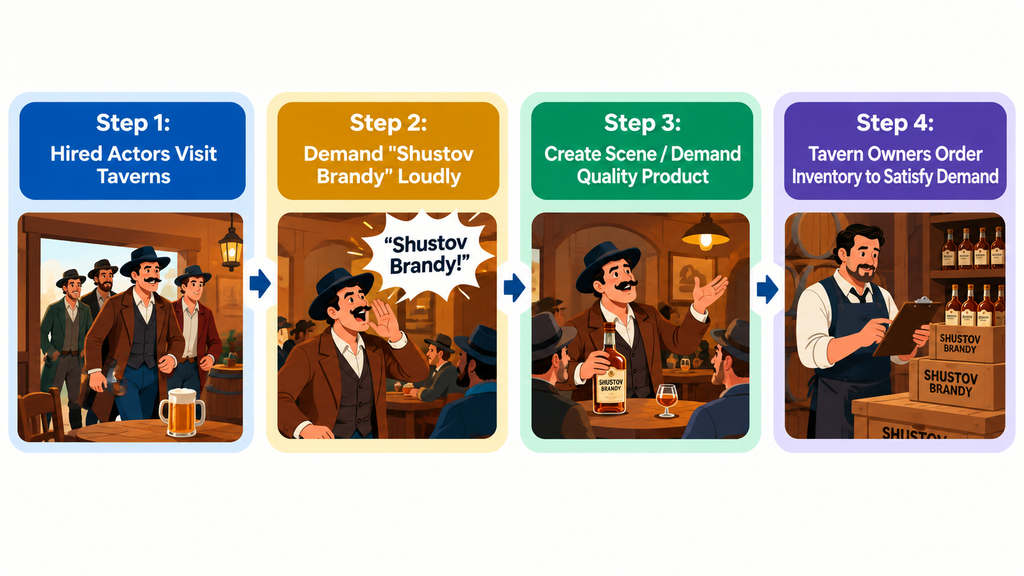
This manufactured demand forced tavern keepers to stock the brand, rapidly securing widespread distribution across major Russian cities.
15. The Scale of Advertising vs. the Tobacco Market
To understand modern corporate expenditure, consider the global turnover of advertising compared to major consumer commodities like tobacco.
The global advertising industry generates over $1.5 trillion annually, driven by digital ad placement, broadcast media, and corporate promotion. In comparison, the global tobacco market generates approximately $800 billion to $900 billion annually. Corporations invest significantly more capital into capturing consumer attention than entire global commodity sectors generate in net product sales.